DATa Analytics® is our proprietary methodology for measuring and analysing greenhouse gas and air pollutant emissions across last-mile logistics — built on actual operational data rather than industry averages, and aligned to the GLEC Framework and ISO 14083:2023.
From artics to cargo bikes, DATa Analytics® applies the same rigorous, data-led methodology across every vehicle on the road — so emissions and efficiency figures stay comparable across your entire fleet.
Not just carbon. DATa® captures the full picture of a vehicle's environmental impact, in the units regulators and customers ask for.
Carbon dioxide from exhaust combustion, measured in g/km. Lower figures indicate better fuel economy and smaller environmental impact.
Nitrogen oxides formed at high combustion temperatures. Linked to respiratory health effects and closely regulated in urban areas.
PM2.5 & PM10 from exhaust and non-exhaust sources — tyre and brake wear, road surface wear — affected by speed and driving conditions.
Well-to-wheel emissions across the full energy lifecycle — from fuel or electricity production through to use — for a complete impact picture.
Volatile organic compounds from combustion and fuel evaporation, contributing to ozone formation and air quality impact.
Benchmark route, vehicle and depot performance against your own fleet history — not a generic industry average.
The first step in the DATa® process is capturing each vehicle's manufacturer specification as registered with the DVLA, via a direct API link — giving us the OEM information that underpins accurate emissions analysis.
DVLA data returned automatically once a vehicle registration is uploaded — no manual entry required
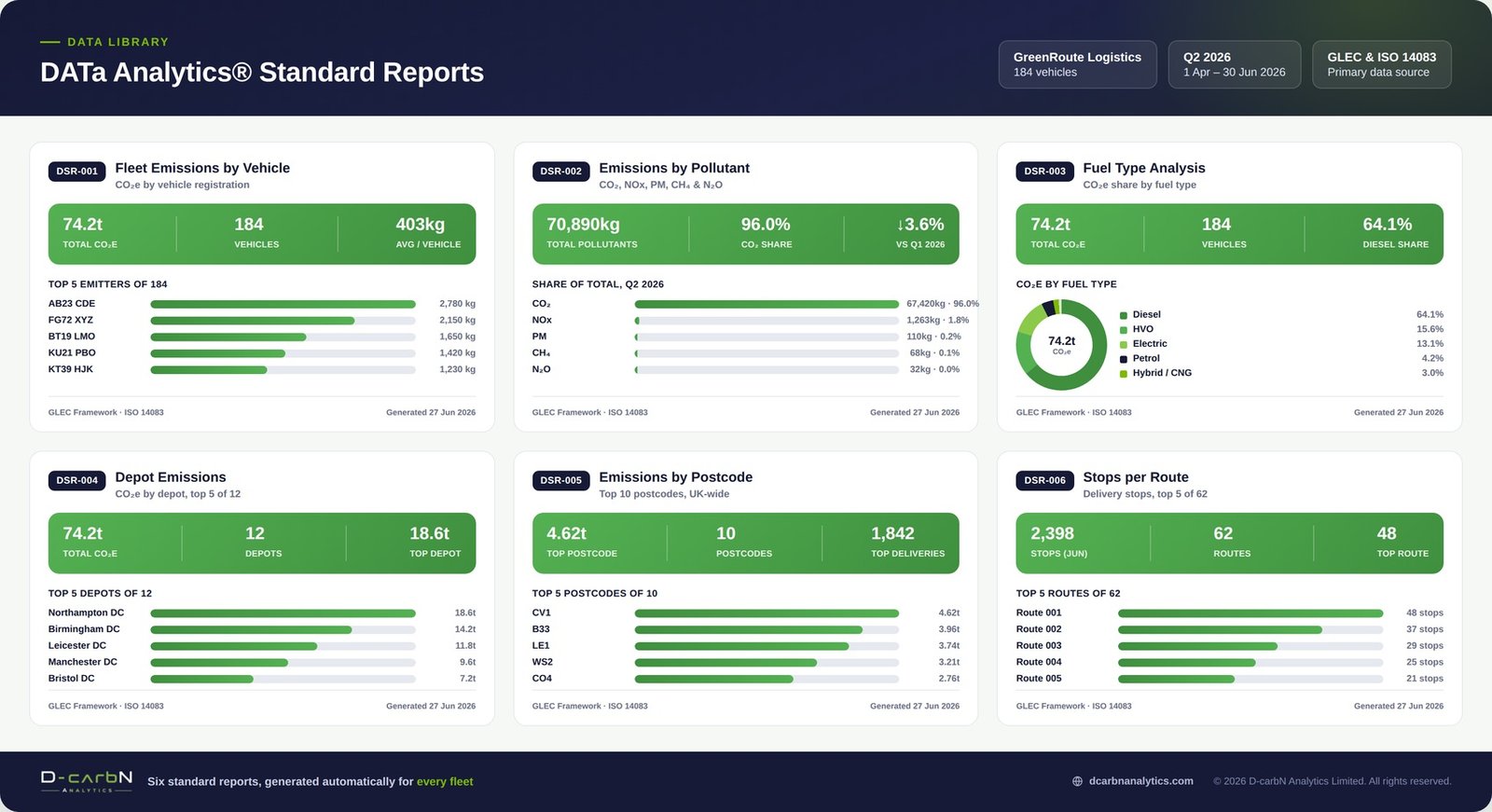
Fleet emissions by vehicle, pollutant, fuel type, depot, postcode and stops-per-route — every report exportable to PDF or Excel, and reportable weekly, monthly or yearly.
DATa® is built to work with whatever data you can share today, and to get sharper as you share more. The more that's provided, the more precise the analysis — and the closer we get from estimated to actual.
| Category | Tier 1 Bronze | Tier 2 Silver | Tier 3 Gold | Tier 3+ Platinum |
|---|---|---|---|---|
| Vehicle Data | – | ✓ | ✓ | ✓ |
| ✓ | ✓ | ✓ | ✓ | |
| ✓ | ✓ | ✓ | ✓ | |
| ✓ | ✓ | ✓ | ✓ | |
| – | ✓ | ✓ | ✓ | |
| Fuel Information | ✓ | ✓ | ✓ | ✓ |
| – | ✓ | ✓ | ✓ | |
| – | – | ✓ | ✓ | |
| Emissions Capture | – | – | – | ✓ |
| Distance & Speed | ✓ | ✓ | ✓ | ✓ |
| – | – | ✓ | ✓ | |
| Tracking Data | – | – | ✓ | ✓ |
| – | – | ✓ | ✓ | |
| – | – | – | ✓ | |
| Delivery / Operational Data | – | ✓ | ✓ | ✓ |
| – | – | ✓ | ✓ | |
| – | – | ✓ | ✓ | |
| – | – | ✓ | ✓ | |
| – | – | – | ✓ | |
| – | – | – | ✓ |
The Tiers may also be referred to numerically (Tier 1–3 Advanced) rather than Bronze–Platinum.
Tell us what data you already have — even Tier 1 is enough to start.