Fuel data is what counts
Fuel and energy consumption — not distance or activity data alone — is what determines whether a calculation qualifies as primary data.

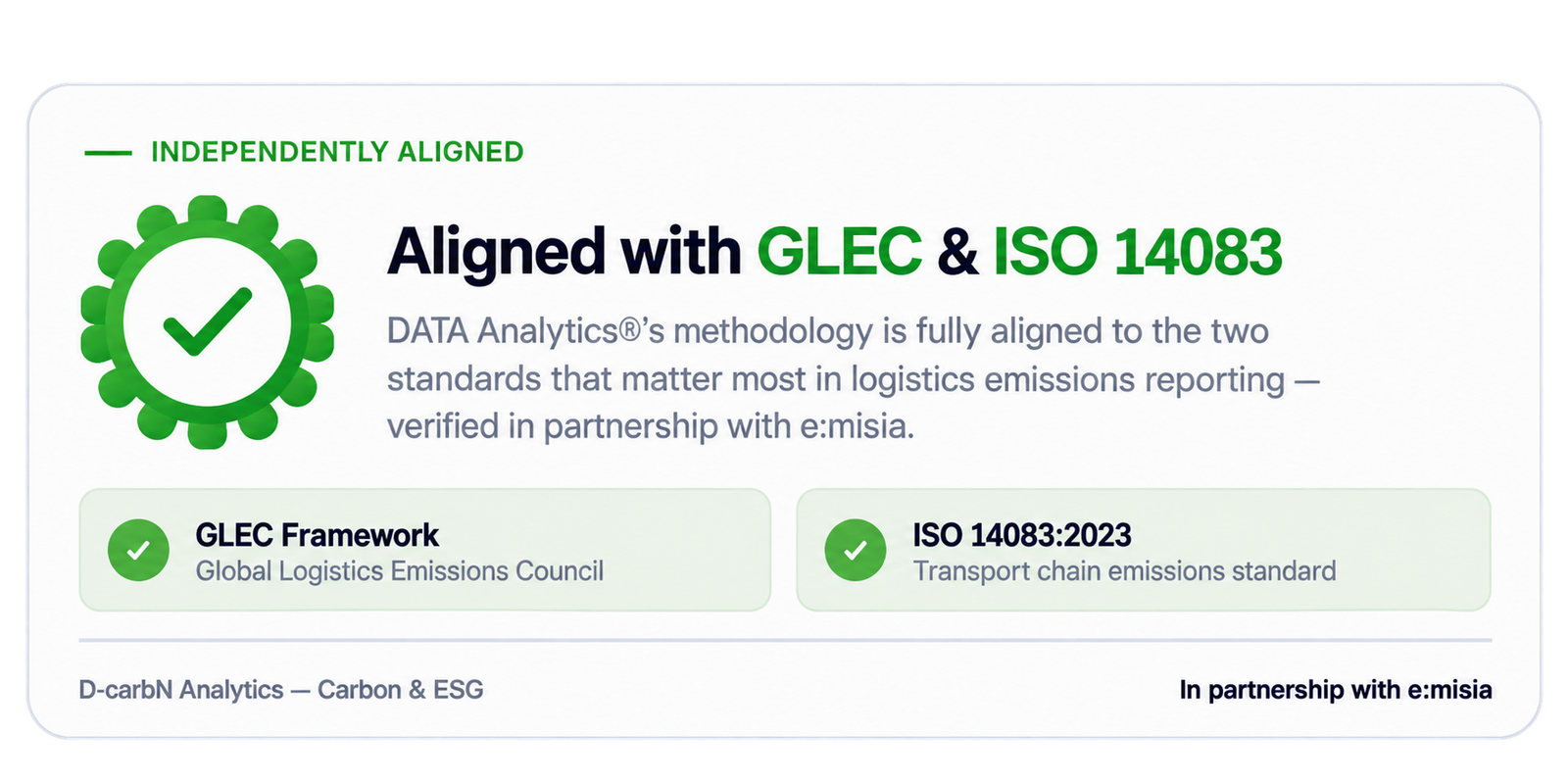
Robust, auditable carbon accounting and ESG reporting aligned to the GLEC Framework and ISO 14083:2023 — developed in partnership with e:misia, specialists in EU and EEA emissions analysis.
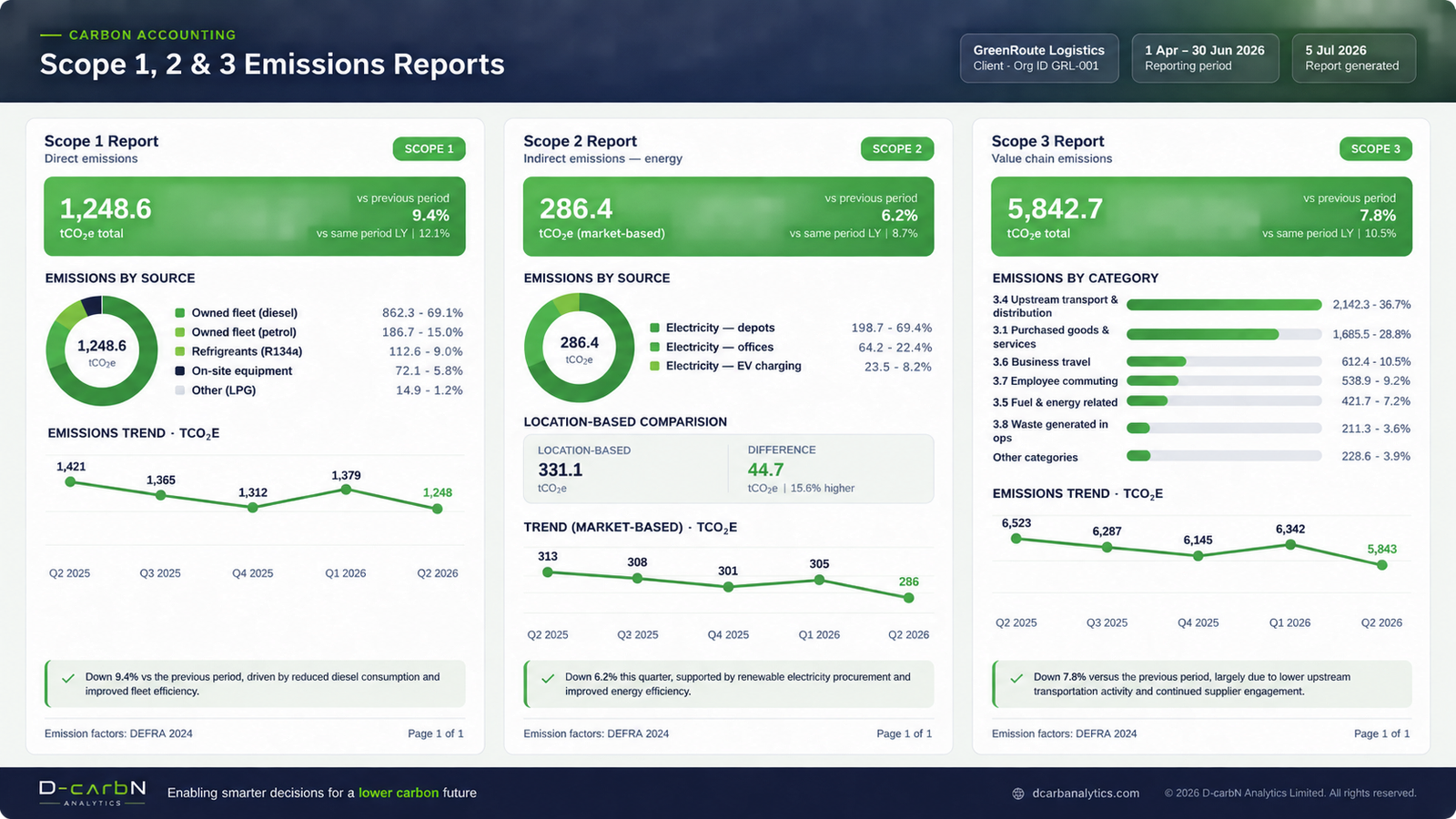
Auto-generated Scope 1 / 2 / 3 reports — ready for customers, boards and auditors
Owned fleet fuel combustion, refrigerants and on-site equipment. Tracked by source, with trend reporting quarter over quarter.
Purchased electricity across depots, offices and EV charging — reported both location-based and market-based.
Upstream transportation, purchased goods & services, business travel, employee commuting and downstream distribution.
In partnership with e:misia, emissions experts aligned to GLEC and ISO standards, DATa Analytics®'s analysis is fully aligned and certified — meaning our reporting meets the world's highest standards for logistics emissions reporting from day one.
Every report exportable to PDF or Excel, on demand
We're not the only ones saying it. As ISO 14083:2023 and the incoming CountEmissionsEU regulation push logistics reporting toward primary data, the wider industry is reaching the same conclusion DATa Analytics® was built around.
“Primary data… is the quantified value of a process or an activity obtained from a direct measurement, or a calculation based on direct measurements. Organisations should prioritise primary data, not just to comply with regulations, but to lead the way in sustainable freight.”
Fuel and energy consumption — not distance or activity data alone — is what determines whether a calculation qualifies as primary data.
ISO 14083:2023 requires total emissions, transport activity and emissions intensity to be reported together, not in isolation.
CountEmissionsEU signals that regulators now expect primary data “wherever available” — not just as best practice.
True Scope 3 reporting means looking past the fleet itself. Our roadmap extends ESG coverage into the wider categories that logistics organisations and their customers are increasingly asked to report on.
Distance travelled to and from work, plus domestic and international business travel.
Spend-based and utility data, with a path toward direct finance-platform integration.
Carbon reporting shared back to customers and collected from suppliers, closing the loop.
See how DATa® builds your carbon accounting reports directly from operational data.